Some recent trophy oars
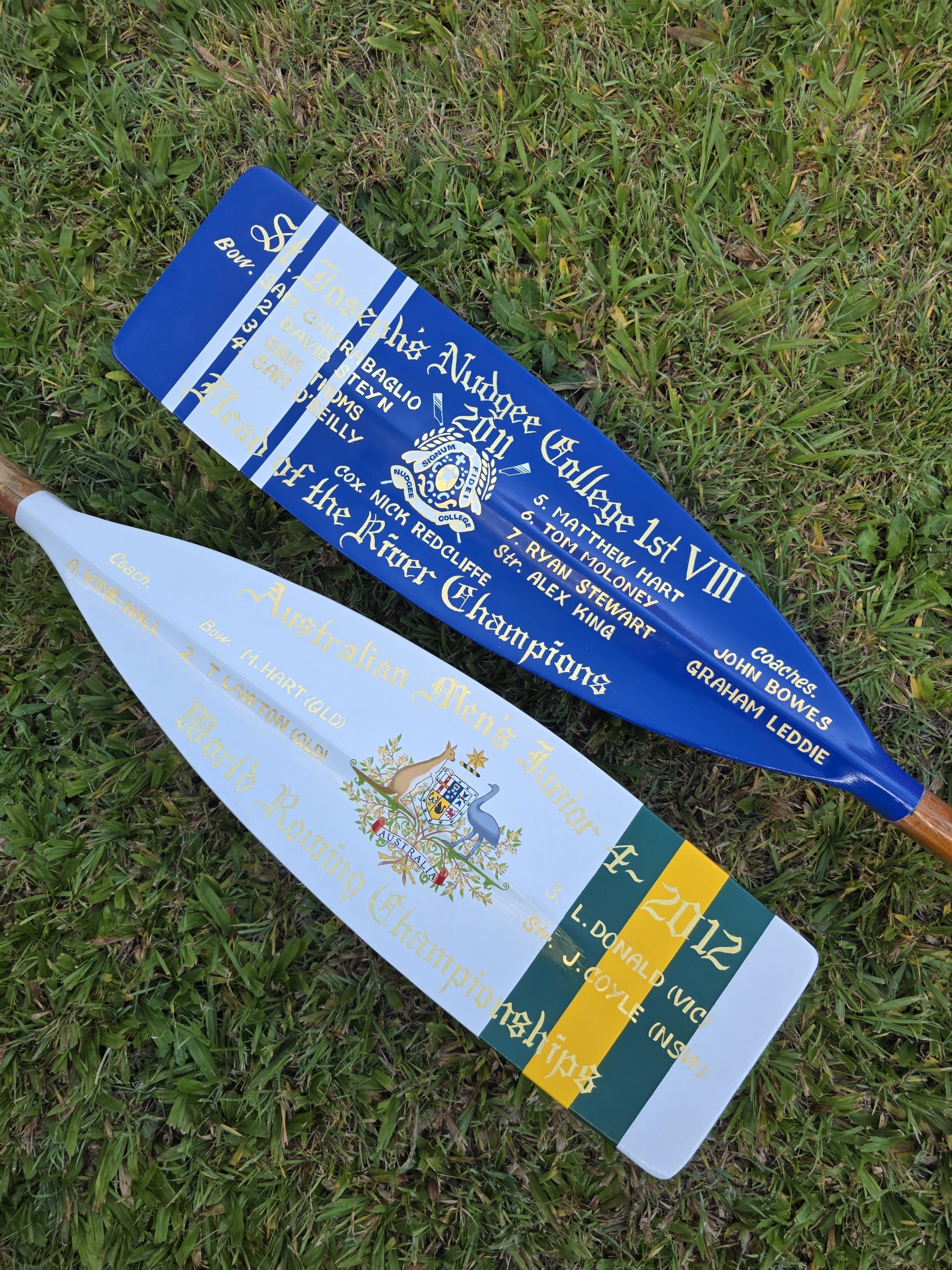
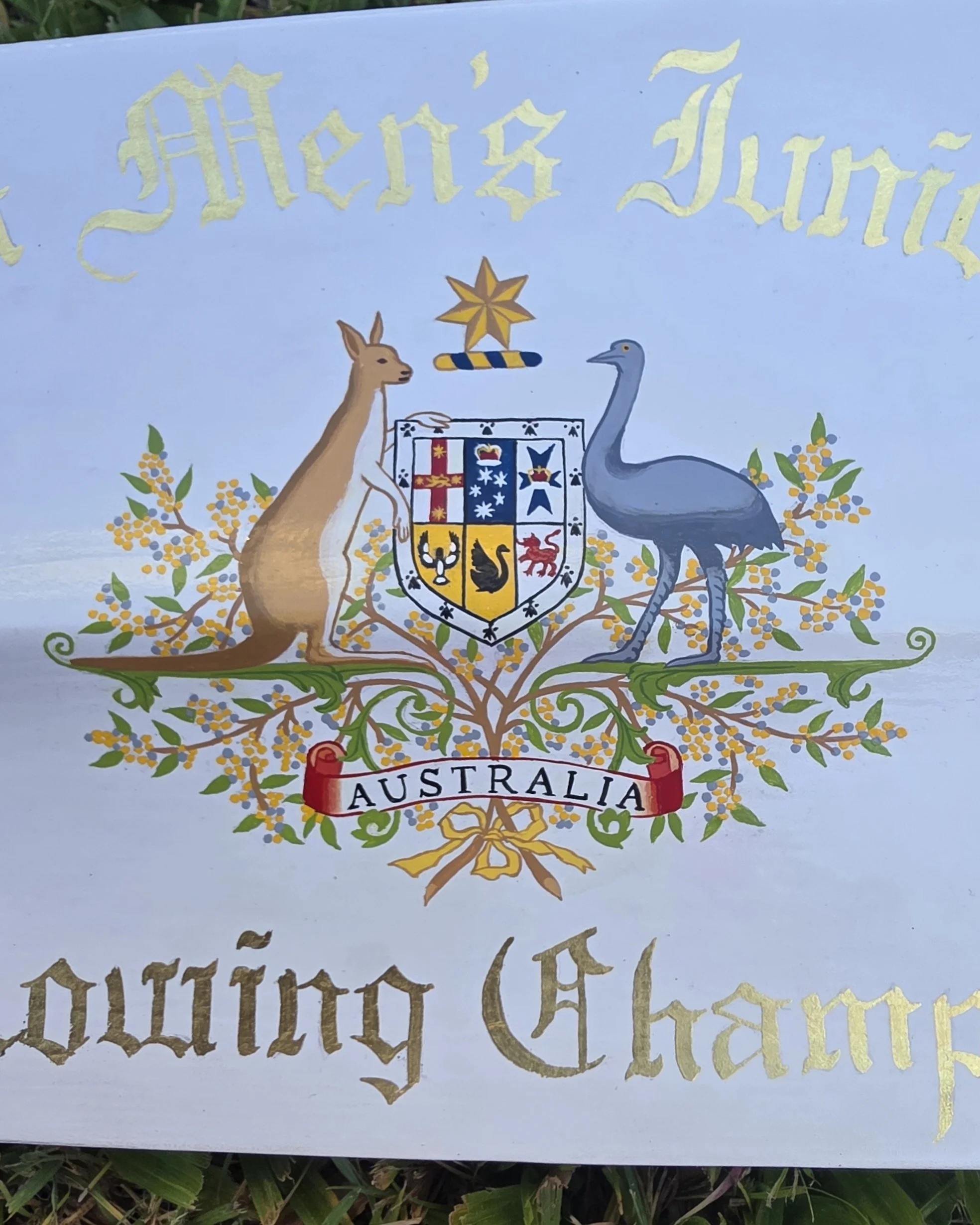
As a trophy oar maker, I am a hand gilder. That means I work with gold leaf not gold paint. More importantly, each piece I create is a work art, not just a computer generated print.
Thank you Matt Hart for trusting me to create these heirloom trophy oars for you. I hope you will enjoy them for decades to come.
Coming face to face with history
Wow! I have been so busy that I haven’t had the chance to update my blog for most of this year! Time to correct that.
In my last post, I was dealing with the challenges of reproducing an 1891 trophy oar from the famed Leander Club. I was able to confirm that the oar was done with gold leaf, rather than gold paint, but the real problems was what was the original colour of the oar. The oar I was reproducing was clearly very faded. So I went on the hunt for a counterpart for this oar.
By the end of the Second World War, Leander was rowing with pink oars, as you can see from the very beautiful needle blade below, but this was clearly not the colour used in 1891.

Thanks to Diana and Richard Way at Way’s Bookstore in Henley-on-Thames, I knew it had to be much closer to red. They have a trophy oar from 1899 hanging in their book shop, but it too is faded, even if it is less faded than the one in Leander Club itself. What was clear was that in the 1890s, Leander rowed with oars painted in some shade on red. But how bright was this shade of red 130 years ago?

Just when I was about to give up and simply use my best guess, an unexpected saviour came to my aid.
The stroke of the 1891 Leander Eight was the legendary Bill Kent. A friend was talking to Bill’s grandson, John Kent, about the problem I was facing. John took everyone by surprise by saying: “I can solve the puzzle. I have four of my grandfather’s Leander trophy oars.” My friend told me he just about fell off his seat.
Not only was John telling the truth, but being the gentleman he is, he sent a photo of the four trophy oars! I found myself coming face to face with history.
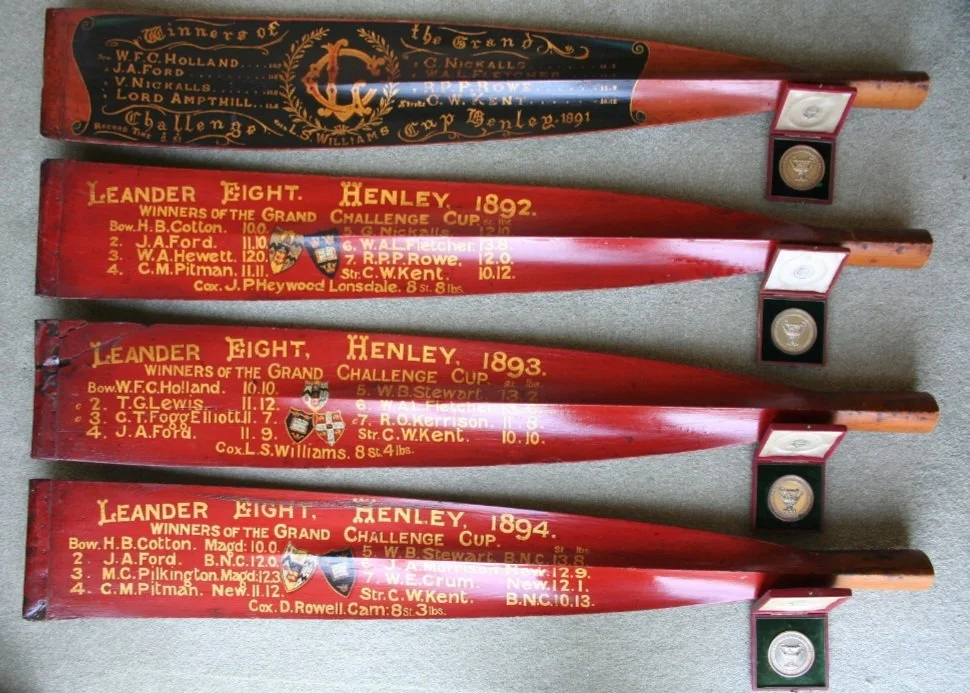
These oars are in excellent condition. In fact, they are in mint condition, as they have been carefully preserved, away from light and heat, and are as glossy as the day they were created.
I thought it was really interesting that three of Bill Kent’s trophy oars were painted by the same maker as the one I was reproducing, but his 1891 trophy oar was different in design, and clearly done by a different craftsman.
Anyway, now I knew the colour I had to paint the oar, and in my next post, I will tell you how I was able to pull off this special commission.
Doing my research
Before I can get started on replicating the Leander trophy oar from 1891, I have quite a bit of research to do. This starts with the original colour of the oar.
These days the club rows with pink oars (officially “cerise”) but the colour has varied over time. The club history refers to the oars in the 19th century variously being described as “scarlet”, "light crimson”, or “red”. That’s a long way from pink!
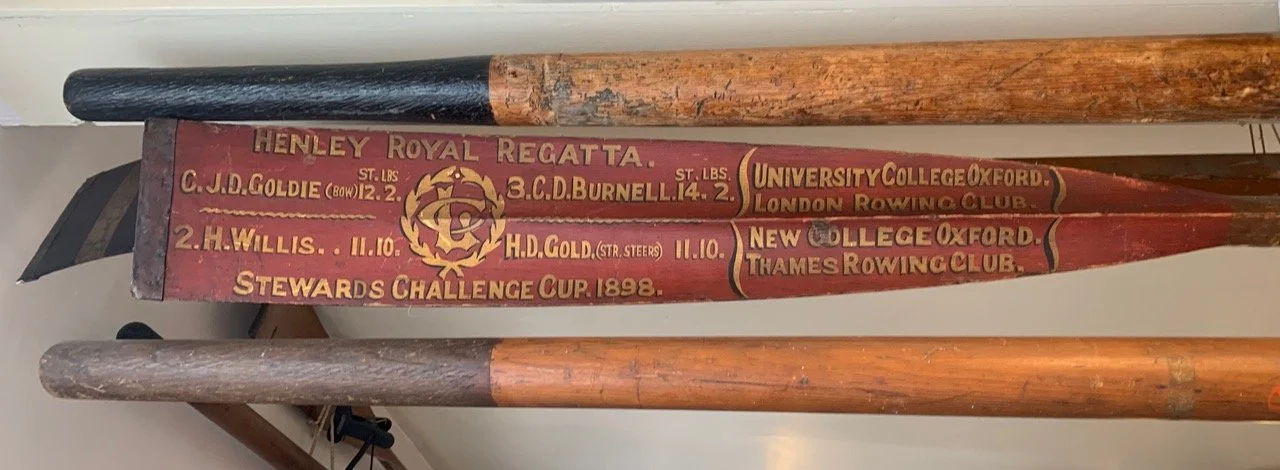
This Leander oar from 1898 is a different shade, and clearly not as deteriorated, but still obviously not in original condition, so I went on the hunt to see what I could find.
After considerable digging I unearthed this 1900 Leander trophy oar, which was sold at auction a few years ago, and which was in excellent condition.
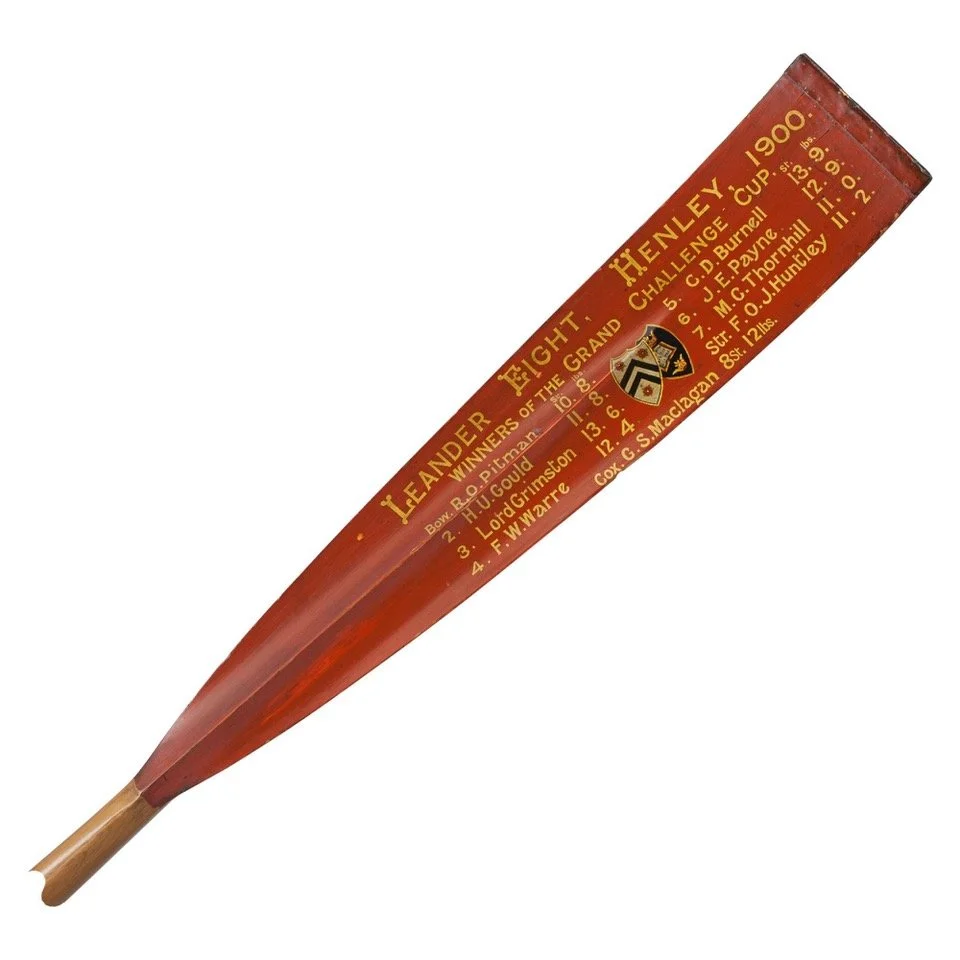
What is really exciting is that the lettering is done in exactly the same style as the 1891 oar, which means it was done by the same painter. That means the original colour of both would have been the same. So, now I can have an oil based enamel paint mixed to exactly this shade.
The other thing I have determined is that the 1891 oar was originally gilded with gold leaf, rather than being painted with gold paint. After all these years it can be hard to tell. The 19891 oar doesn’t have the “lustre” associated with gold leaf, but would more likely to do with the fact more than a couple of years have gone by.
I looked carefully at some other trophy oars from the 1890s, and some displayed paint cracking on the lettering, and others did not. The ones that showed cracking were also very discoloured. Gold leaf stands the test of time better, often outlasting well beyond the failure of the pain beneath.
So gold leaf it is. That’s great by me, because gilding is my great strength.
Next post, I’ll talk about finding a physical replica for a 130 year old oar!
My first historic commission
I have been given my first historic trophy oar commission. I have been asked to replicate this 1891 Leander Club trophy oar commemorating the club’s win in the Grand at Henley Royal Regatta that year.
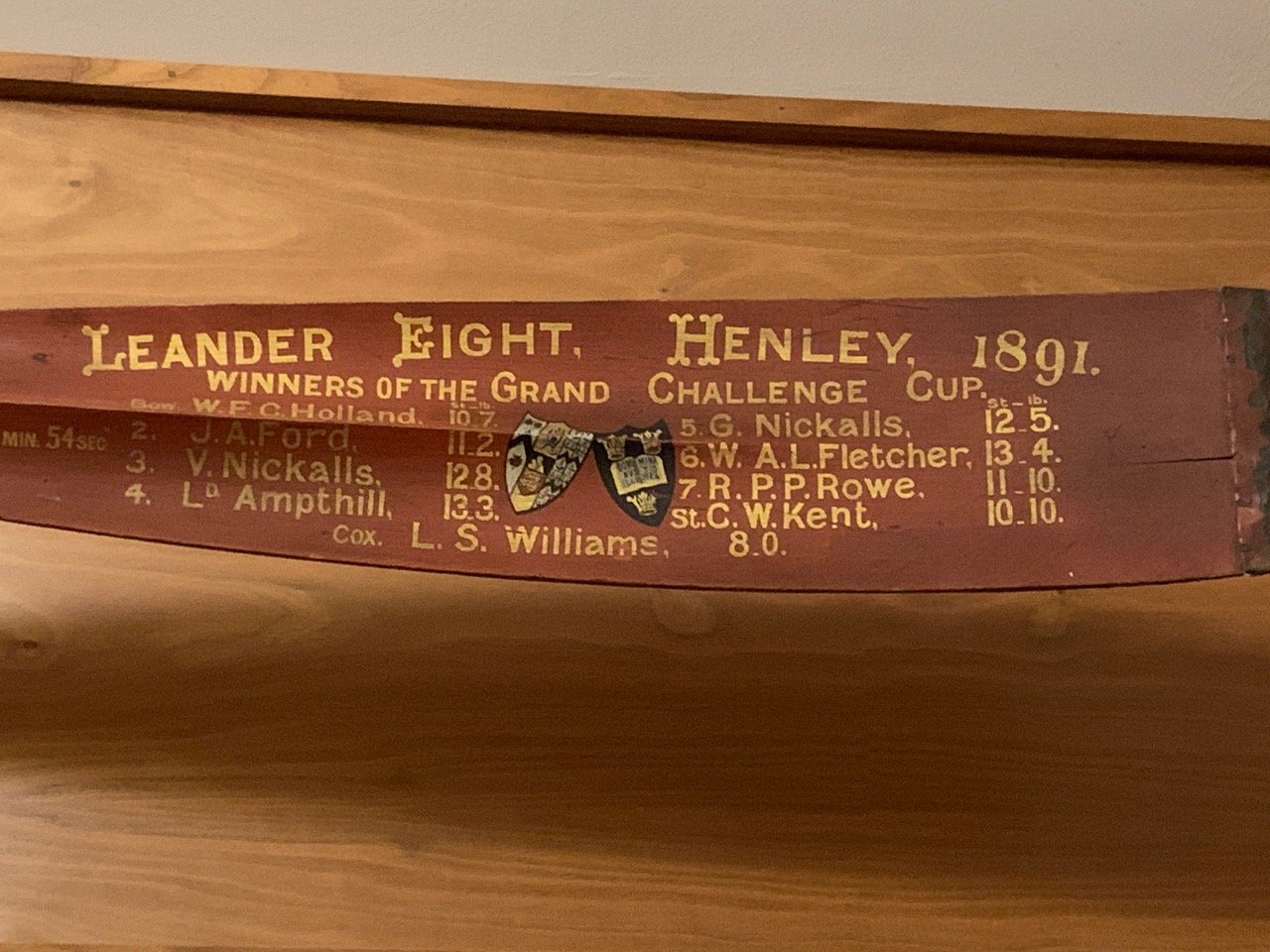
The oar is located in the library of Leander Club in Henley-on-Thames. For those of you who don’t know, Leander Club is the fourth oldest competitive rowing club in the world (the only older ones being Brasenose College, Jesus College and Christ Church, all at Oxford University). Leander was founded in 1818 in London. In 1897 the club moved to its current site at Henley-on-Thames, opposite what was then the finishing line of the regatta.
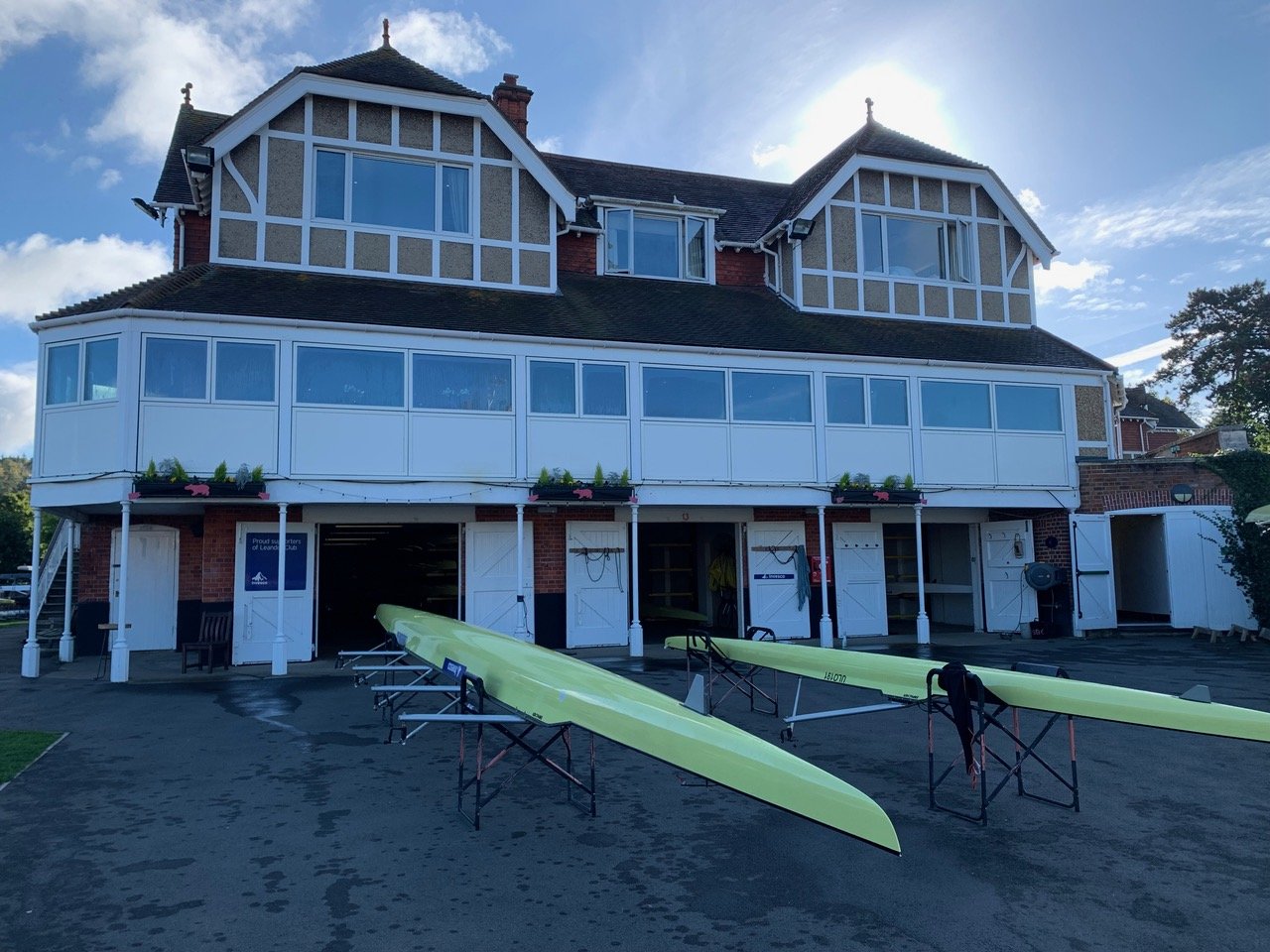
Leander is arguably the world’s most prestigious rowing club, with membership by election only for those who have achieved significant “proficiency in oarsmanship” (such as rowing the Boat Race or an Olympics, or making a final at Henley Royal Regatta), or for “distinguished services to rowing”. Since 1908 its members have won over 200 Olympic medals!
So, it is quite an honour to get this commission. It will also be quite a challenge. There will be a lot of research before I can get started, which I shall discuss in the my next blog.